Prof. Nikolaos P. Ventikos
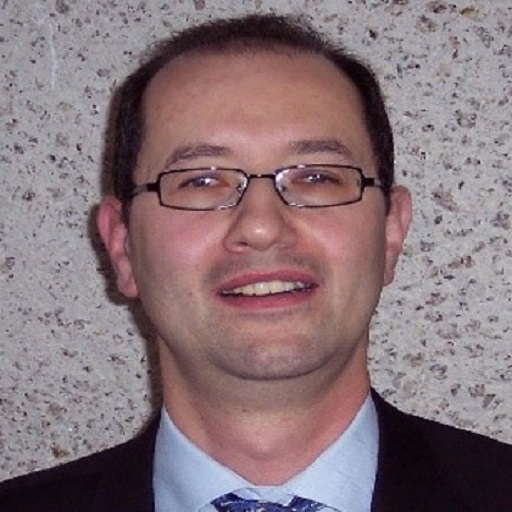
Prof. Nikolaos P. Ventikos
National Technical University of Athens - Polytechnic Campus, Greece
Title: From Human Error to Human–AI Resilience: Rethinking Safety in Autonomous Shipping
Abstract: Maritime safety is undergoing a fundamental transformation driven by autonomous and AI-enabled technologies. Traditional safety models, largely focused on attributing accidents to human error, are increasingly inadequate for addressing the complexity of modern cyber-physical ship systems. This presentation argues that safety in autonomous shipping is not achieved by removing humans, but by redefining their role as a central source of system resilience.
Autonomous shipping is framed not as human replacement, but as Human-AI Teaming. AI contributes continuous monitoring, pattern recognition, and computational speed, while humans provide contextual awareness, ethical judgment, and adaptive decision-making under deep uncertainty. Safety is not inherent in either element alone, but emerges from their effective integration. Human-AI resilience is understood as the combined system’s ability to anticipate, absorb, and recover from unexpected conditions, particularly when automated systems reach their limits.
Within this shift, the presentation highlights the need to move beyond traditional Human Factors frameworks, which are originally developed for human-centered operations, toward a new Human-AI Systems framework. This emerging approach focuses on interaction quality, automation brittleness, role allocation, authority management, and shared situational awareness across human-machine teams.
The presentation also addresses the evolving regulatory landscape, including the ongoing transition toward the IMO MASS Code, and examines its implications for education and training, where maritime professionals evolve from manual operators to supervisory controllers. Furthermore, the critical role of universities as neutral, evidence-based safety enablers is highlighted. Finally, the potential contribution of the National Technical University of Athens (NTUA) and the related research activities of the NTUA's academic research group Maritime Risk Group (MRG) in supporting this transition is briefly presented.
BIO: Dr Nikolaos P. Ventikos is a Professor in the Laboratory for Maritime Transport at the School of Naval Architecture and Marine Engineering of the National Technical University of Athens (NTUA), Greece. He is the Founder of the Maritime Risk Group (MRG). Dr Ventikos’s expertise is in marine safety; risk engineering; maritime transport; (oil) marine pollution; risk-based design for ships and (transport) systems; human reliability (incl. human-centered design); autonomous shipping and operations; marine casualty investigation; marine health risk analysis; systems engineering; transport ecosystem design; AI-enhanced safety analysis; resilience engineering; and offshore and environmental risk. He has published and presented his work in journals such as Nature, Marine Pollution Bulletin, Journal of Hazardous Materials, Maritime Policy and Management, Ships and Offshore Structures, Journal of Risk Research, Reliability Engineering & System Safety etc., and in more than 150 scientific conferences. Dr Ventikos was awarded the G.P. Livanos Grand Prize on Environmental Issues sponsored by the Hellenic Chamber of Shipping (2000). Dr Ventikos is the Chair of the Implementation and Review Group of the Waterborne Technology Platform (WTP).