Prof. Giorgos P. Tsironis
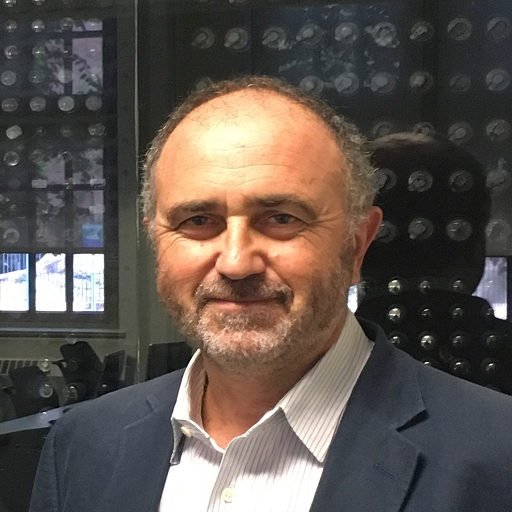
Prof. Giorgos P. Tsironis
University of Crete, Greece
Title: Complex Dynamical Systems investigations with Machine Learning
Abstract: Pioneering research contributions in Artificial Intelligence (AI) received two Noble prizes in Physics and
two in Chemistry last year. John Hopfield and Geoffrey Hinton got the Physics prize while Demis Hassabis
and John Jumper got the Chemistry prize all for work related to the development and applications in AI. In
2021 Giorgio Parisi received the Physics Nobel prize for work in Complex dynamical and statistical systems.
Most recent developments in AI are founded on networks of artificial neurons that are themselves very
complex and involved. On the other hand, complexity is typically thought to involve chaos, solitons, fractals
and self-organization. Linking complex systems with AI is intriguing since it might provide clues on how to
better deal with nonlinear systems using machine learning and similar techniques. At the same time, complex
systems work may enable the deeper, possibly statistical, understanding of complicated AI networks. In this
talk I will present ideas and results on how to apply machine learning in complex dynamical systems and
learn something new about these systems. The basic question that underlies this talk is whether we can
actually teach the computer to learn analytical solutions of physical problems. We will present a number of
results showing that the answer is generally affirmative, even though precise analytical foundations are
lacking. We also address briefly the issue of whether there is a role for quantum computation in this search.
Finally, we show that application of these new methods in medicine is very pertinent and could hopefully
lead to a healthier and happier life for all of us that is of course the ultimate goal of science.
BIO: Prof. Giorgos P. Tsironis is Professor of Physics at the Department of Physics of the University of Crete in Greece and also leads the Nonlinear and Statistical Physics Group at IESL-FORTH. He obtained his PhD in Theoretical Condensed Matter and Statistical Physics from the University of Rochester (USA) in 1987. He was a postdoctoral associate at the University of California San Diego (1987-89) and the Fermi National Accelerator Laboratory (1989-91) and assistant professor of Physics at the University of North Texas (1991-96) while also affiliated with the Superconducting Super Collider Laboratory (1991-1993). He joined the Department of Physics of the University of Crete in 1994 as associate professor and became professor in 2000. He was visiting professor of the University of Barcelona in Spain (2000-1 and 2006-7) and Technion in Haifa, Israel ( 2013 and 2014), professor at Nazarbayev University in Kazakhstan (2014-15) while more recently he has been visiting fellow and professor at the School of Engineering and Applied Sciences of Harvard University (2017- 19 and 2022-23) and Cavendish Laboratory at Cambridge University (2018).
His research interests are in the areas of condensed matter physics, statistical mechanics, nonlinear physics, complexity, biological physics and metamaterials. In 1997 he was awarded the international Stephanos Pnevmatikos award for his “many contributions to nonequilibrium statistical mechanics and the theory of solitons in non-linear lattices, with applications to molecular crystals and biophysics”. His recent interests involve the role of nonlinearities and breathers in superconducting as well as quantum metamataterials. He has published over 180 papers in refereed journals while he (co-)organized a number of international conferences, workshops and advanced summer schools in the area of statistical mechanics and non-linear physics. During his career so far, he mentored 14 PhD students, many of which are currently holding faculty positions in academia.
Since 2018 his research and teaching is focusing on the use of artificial intelligence (AI) in complex systems. He established a sequence of two undergraduate courses “Introduction to Data Science and Machine Learning” that are being taught at the University of Crete and were also taught in the National University of Science and Technology MISiS in Moscow, Russia both in class and remotely. In 2021 he also established an International Master program at the Greek Open University on Data Science and Machine Learning. On the research front he has used AI in medical and biological applications, such as cardiology, COVID-19 virus spreading and neurodegenerative diseases, in detecting chimeras in complex, spatiotemporal networks as well as in quantum targeting processes.
In terms of administration positions, he has served as director of the University of Crete Computer Center (2003-09), chairman of the Department of Physics of the University of Crete (2007-2011), acting chair of the Department of Physics, Nazarbayev University (2014-15) and deputy rector of the University of Crete (2016-17). He has established and directs the Crete Center for Quantum Complexity and Nanotechnology which at the initial stage (2013-2017) has been funded by EU. Since September 2020 he is also the director of the Institute for Theoretical and Computational Physics that is affiliated with the University of Crete.